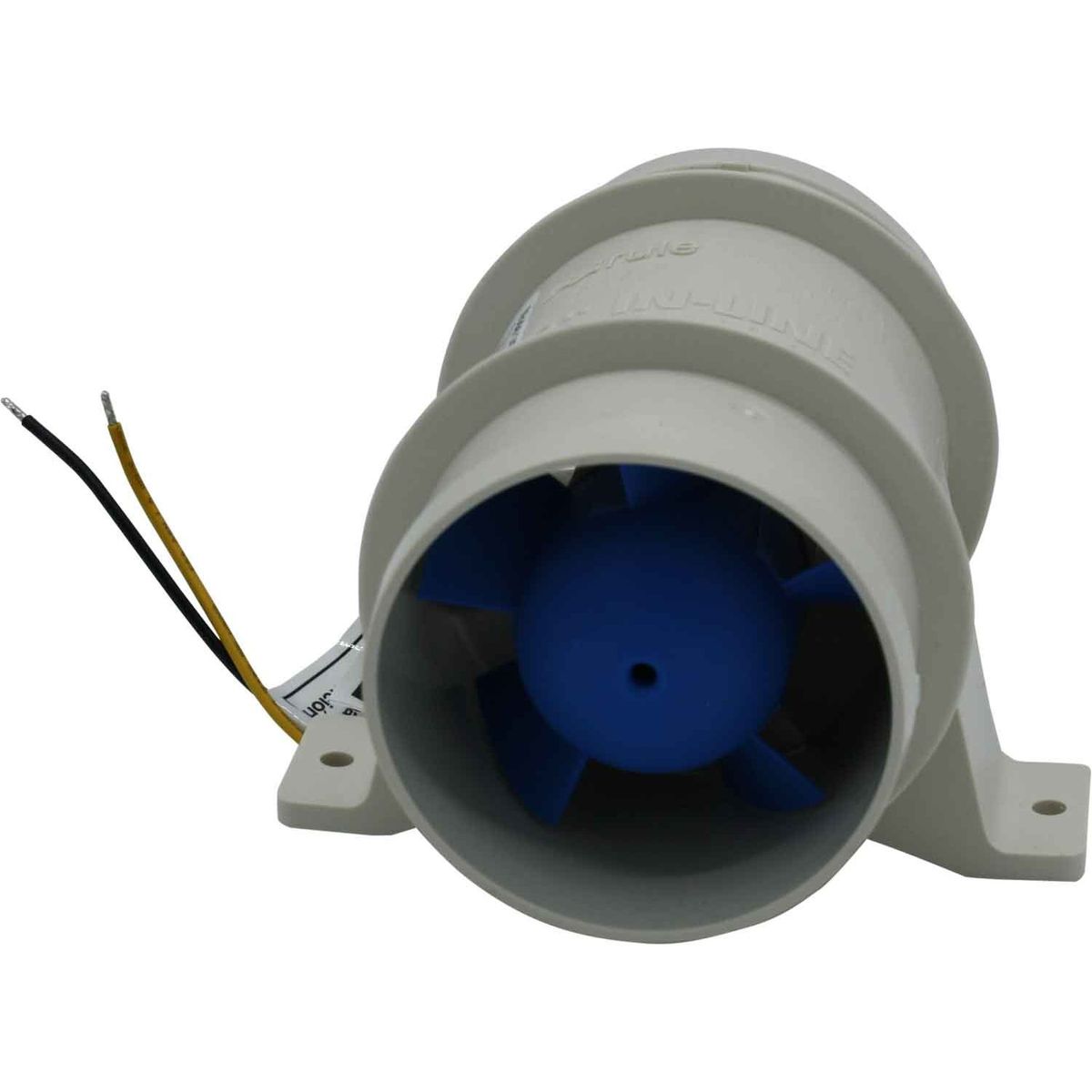


Rule 140 Inline Bilge Blower - 76mm
Rule 140 Inline Bilge Blower - 76mm
SKU: ASAP-716704
The Rule 140 and Rule 140-24V inline bilge blowers provide 135 CFM of open airflow through 76 mm (3 in) marine ventilation ducting. Choose the Rule 140 for a 12V electrical system or the Rule 140-24V for a 24V system.
Delivery available | lead times vary
Collection available | usually ready in 2-4 days
Description
Description
The Rule 140 and Rule 140-24V inline bilge blowers provide 135 CFM of open airflow through 76 mm (3 in) marine ventilation ducting. Choose the Rule 140 for a 12V electrical system or the Rule 140-24V for a 24V system.
These compact inline marine blowers are designed to move air through ventilation systems serving bilges, engine compartments, galleys and heads. Both models use slip-on duct connections, sealed motor shafts and corrosion-resistant nickel-plated motor housings for permanent marine installations.
Product Identification
- Brand: Rule
- Product name: Rule 140 Inline Bilge Blower
- Models / part numbers: 140 and 140-24V
- Marine Scene SKUs: CW-140 and CW-140-24V
- Product category: Inline marine ventilation blower
- Voltage options: 12V DC or 24V DC
- Open airflow: 135 CFM (3.8 m³/min)
- Duct size: 76 mm (3 in)
- Quantity supplied: One blower
What Is the Rule 140 Bilge Blower Used For?
The Rule 140 is used to move air through marine ventilation ducting connected to bilges, petrol-engine compartments, galleys, heads and other enclosed boat spaces. It helps remove accumulated vapours, heat, moisture and stale air.
This is an air blower only. It must not be used to pump bilge water or any other liquid.
What Is Included?
- One Rule inline marine ventilation blower
- Integral mounting feet
- Factory-fitted electrical leads
What Is Not Included?
- Ventilation ducting
- Duct clips, cable ties and outlet grilles
- Control switch
- Circuit-protection fuse and fuse holder
- Cable extensions and waterproof connectors
- Mounting screws and installation sealant
What Is the Difference Between the 12V and 24V Models?
Both variants provide the same airflow, use the same 76 mm ducting and have the same published dimensions. Select the version that matches the vessel's electrical system:
- Rule 140: For nominal 12V DC systems
- Rule 140-24V: For nominal 24V DC systems
The 12V model has a higher current draw and requires a 4A fuse. The 24V version draws less current and requires a 2.5A fuse.
Which Marine Ventilation Systems Are These Blowers Compatible With?
- 76 mm (3 in) marine ventilation ducting
- 12V or 24V boat electrical systems, according to the selected variant
- Bilge and engine-compartment ventilation systems
- Galley and marine-head ventilation systems
- Flat deck, transom or bulkhead mounting surfaces
How Should the Blower and Ducting Be Selected?
Match the blower to the complete ventilation system rather than selecting by airflow alone:
- Electrical system: Choose 12V or 24V
- Duct diameter: 76 mm (3 in)
- Published open airflow: 135 CFM (3.8 m³/min)
- 12V electrical data: 2.9A draw at 13.6V; 4A fuse
- 24V electrical data: 1.7A draw at 27.2V; 2.5A fuse
- Published dimensions: 76 × 127 × 81 mm
- Installation layout: Keep ducting short and minimise sharp bends or restrictions
Does the Published Airflow Equal the Installed Airflow?
No. The 135 CFM figure is an open-flow rating. Installed airflow will reduce as the length of ducting, number of bends, outlet resistance and inlet restrictions increase.
Construction and Design
- Motor housing: Corrosion-resistant nickel-plated housing
- Shaft protection: Front and rear motor-shaft seals
- Duct connections: Slip-on inlet and outlet connections
- Mounting: Compact inline housing for a secure flat surface
- Ignition protection: Yes; USCG 183.410 compliant
- CE compliance: Yes
Installation and Safety
Mount the blower on a secure, flat surface and position it so the airflow arrow points towards the exhaust vent. Keep the duct run as short and unrestricted as practical, and protect the circuit using the fuse specified for the selected voltage.
Keep electrical connections above the highest anticipated water level and protect them against marine corrosion. The blower must not be submerged or positioned where it will be exposed to continuous spray or deck-wash water.
Petrol vapours can explode. Before starting a petrol engine, operate the blower for four minutes and check the engine compartment for vapours. Continue using the blower as required by the vessel manufacturer and applicable ventilation regulations.
Maintenance
Check the complete ventilation system regularly to confirm that air can move freely through the intake, blower, ducting and exhaust outlet.
- Remove obstructions from ventilation grilles and ducting.
- Inspect duct joints for collapse, leakage or detachment.
- Check the blower housing, mounting screws and electrical wiring.
- Inspect the fuse, switch and terminals for corrosion or overheating.
- Replace a blower that becomes unusually noisy, damaged or fails to provide normal airflow.
Key Features
- 135 CFM (3.8 m³/min) open airflow
- 12V and 24V variants
- 76 mm (3 in) duct connections
- Low-current operation
- Slip-on inlet and outlet connections
- Front and rear motor-shaft seals
- Corrosion-resistant nickel-plated motor housing
- Compact flat-surface mounting design
- Ignition protected and CE compliant
Frequently Asked Questions
Is the Rule 140 a bilge-water pump?
No. It is an air blower for marine ventilation ducting and cannot pump liquids.
What is the difference between models 140 and 140-24V?
Model 140 is for nominal 12V systems, while model 140-24V is for nominal 24V systems. Both provide the same 135 CFM airflow and connect to 76 mm ducting.
What duct size is required?
Use 76 mm (3 in) marine ventilation ducting.
Can the 12V model be connected to a 24V system?
No. Select the model that matches the vessel's supply voltage.
Does the quoted airflow include duct resistance?
No. The 135 CFM specification is an open-flow figure. Long duct runs, bends and restrictions reduce installed airflow.
How long should the blower run before starting a petrol engine?
Operate the blower for four minutes and check the engine compartment for petrol vapours before starting the engine.
Specifications
| Specification | 140 | 140-24V |
|---|---|---|
| Brand | Rule | Rule |
| Product category | Inline marine ventilation blower | Inline marine ventilation blower |
| Marine Scene SKU | CW-140 | CW-140-24V |
| Nominal electrical system | 12V DC | 24V DC |
| Published test voltage | 13.6V DC | 27.2V DC |
| Open airflow | 135 CFM (3.8 m³/min) | 135 CFM (3.8 m³/min) |
| Current draw | 2.9A at 13.6V | 1.7A at 27.2V |
| Recommended fuse | 4A | 2.5A |
| Duct size | 76 mm (3 in) | 76 mm (3 in) |
| Published dimensions | 76 × 127 × 81 mm (H × W × D) | 76 × 127 × 81 mm (H × W × D) |
| Motor housing | Corrosion-resistant nickel-plated housing | Corrosion-resistant nickel-plated housing |
| Shaft protection | Front and rear shaft seals | Front and rear shaft seals |
| Duct connections | Slip-on inlet and outlet connections | Slip-on inlet and outlet connections |
| Ignition protection | Yes; USCG 183.410 compliant | Yes; USCG 183.410 compliant |
| CE compliance | Yes | Yes |
The stated 135 CFM capacity is an open-flow rating. Installed airflow will reduce as duct length, bends, inlet restrictions and outlet resistance increase.
Specification
Specification
| Specification | 140 | 140-24V |
|---|---|---|
| Brand | Rule | Rule |
| Product category | Inline marine ventilation blower | Inline marine ventilation blower |
| Marine Scene SKU | CW-140 | CW-140-24V |
| Nominal electrical system | 12V DC | 24V DC |
| Published test voltage | 13.6V DC | 27.2V DC |
| Open airflow | 135 CFM (3.8 m³/min) | 135 CFM (3.8 m³/min) |
| Current draw | 2.9A at 13.6V | 1.7A at 27.2V |
| Recommended fuse | 4A | 2.5A |
| Duct size | 76 mm (3 in) | 76 mm (3 in) |
| Published dimensions | 76 × 127 × 81 mm (H × W × D) | 76 × 127 × 81 mm (H × W × D) |
| Motor housing | Corrosion-resistant nickel-plated housing | Corrosion-resistant nickel-plated housing |
| Shaft protection | Front and rear shaft seals | Front and rear shaft seals |
| Duct connections | Slip-on inlet and outlet connections | Slip-on inlet and outlet connections |
| Ignition protection | Yes; USCG 183.410 compliant | Yes; USCG 183.410 compliant |
| CE compliance | Yes | Yes |
The stated 135 CFM capacity is an open-flow rating. Installed airflow will reduce as duct length, bends, inlet restrictions and outlet resistance increase.